At the end of every school year, students across America put on a cap and gown to mark their transition into adulthood. High school graduates walk across the stage, shake hands with school leaders, and ceremoniously toss their caps into the air.
Why is it customary for graduates to wear such specific attire? According to GraduationSource.com, the tradition of wearing caps and gowns started in Europe during the 12th and 13th centuries when the first universities were built. It’s believed students wore the gowns to stand out from the general public and to keep warm, since these schools were often religious institutions and held in cold buildings.
Even though this tradition began hundreds of years ago, it has now become a huge industry. A company named Jostens has become one of the top providers of graduation gear—and some believe it holds an unfair monopoly over the market. This private business has made millions off students trying to participate in a once-in-a-lifetime event.
At Ukiah High School, seniors are required to purchase their caps and gowns through Jostens. The minimum price students will pay is $55, though many spend more for packages with tassels, keepsakes, or custom gear. While similar-looking gowns can be found online for lower prices, some students in the past have found the colors didn’t match and were forced to borrow one from someone else.
For students unable to afford graduation attire, Ukiah High offers some support. The school’s Family Liaison Office provides assistance for homeless youth, and the Student Activities Office has purchased a number of extra caps and gowns that can be borrowed. However, sizes are limited, and students who borrow gowns aren’t allowed to decorate their caps—a tradition many seniors look forward to as a way to express themselves at graduation.
While it’s unclear how many schools Jostens supplies, the company’s website says it serves “thousands” of schools across North America.
Senior Jada Sturges shared her opinion on the price of caps and gowns: “I think it’s unrealistic to pay $70 or over $100 for a package of something that I can get for probably $20 on Amazon.” She added, “I actually know a lot of people who have done that and are getting something just as good of quality as Jostens is offering.”
Another senior, Genica Holderman, also questioned the pricing. “I personally don’t think cap and gowns are reasonably priced,” she said. “Most families here in Ukiah are very low income.” Holderman added that she believes there are many in the senior class “not able to afford those” and the cost is “kind of unreasonable.”
Jostens has also faced controversy over its business practices. According to The Daily, the company once used prison labor to manufacture its caps and gowns, but moved production to Mexico in the 1990s. Over the years, Jostens has also been sued multiple times. One case involved a rival company, Balfour, accusing Jostens of trying to steal sales reps and confidential client information. Other lawsuits have alleged labor violations, including workers not being paid for activities required before their shifts.
Ukiah High News emailed Jostens requesting comment about concerns raised in this article but did not receive a response by the time of publication.
Next school year, Wildcats can expect a major shift to their daily routine. For the 2025–2026 school year, Ukiah High will implement a new bell schedule—one of the most significant changes since the COVID-19 pandemic. The plan is finally confirmed after months of discussion, research, and collaboration among staff, administration, and students.
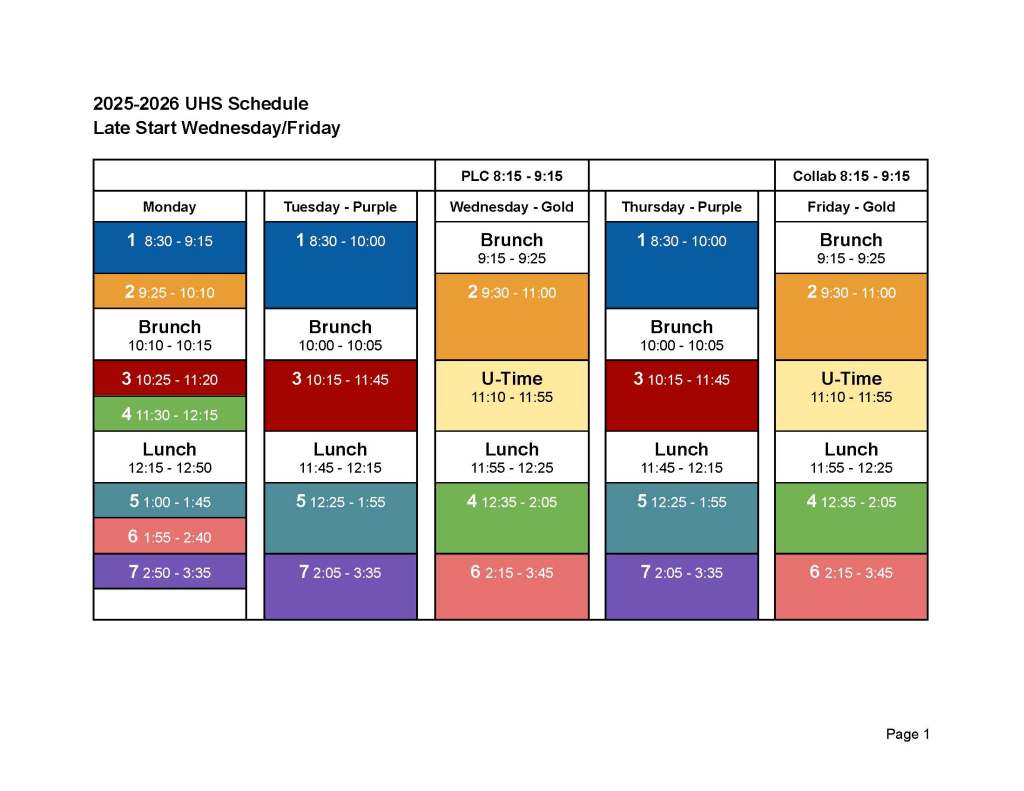
Mondays will kick off the week with a change: students will attend all seven periods in a rapid-fire format, with each class lasting just 45 minutes. A newly developed rostered tutorial known as “U-Time” will not occur these days, allowing for a quicker pace and full rotation through every class.
Tuesdays and Thursdays—also known as Purple Days—will stay mostly the same. Students will go to 1st, 3rd, 5th, and 7th periods, each running for 90 minutes. The school day will begin at 8:30 a.m. and wrap up slightly earlier than usual at 3:35 p.m., ten minutes ahead of the current dismissal time.
The most dramatic change comes on Wednesdays and Fridays, designated as Gold Days. Instruction will start an hour later at 9:30 a.m. to make room for teacher collaboration meetings. Students will attend 2nd, 4th, and 6th periods, each 90 minutes long, and will also have U-Time, a flexible period built into the day for academic support, independent work, or visiting other teachers for help.
At the heart of the change is a key concern identified by teachers and administration: students aren’t consistently using the current tutorial period for its intended academic purpose. Designed as a time for students to catch up on homework, connect with teachers, or visit the library for tutoring, the staff told UHS News that the tutorial period has increasingly become a free-for-all, with some students leaving campus or socializing instead.
In response, a team of teachers and administrators worked together to develop a new schedule they believe better serves the needs of the student body and enhances the learning environment. Students will now be required to attend “U-Time,” a daily check-in with their assigned teacher for built-in academic support, no more optional morning or afternoon tutorials.
“The idea is that it’s an academically based intervention or enrichment,” said Principal Dr. Analese Alvarez. “It’s what a tutorial is intended to be. We are making it what we call an embedded or rostered time, where every student will be assigned a place to go—like a homeroom, if you will—and then be able to receive enrichment or academic intervention based on what they need.”
Another noticeable change is the introduction of a “dismissal period” for 11th and 12th graders who are on track to graduate, providing them with more flexibility in their schedules. Meanwhile, all students will be required to attend a mandatory intervention period on Gold Days.
The need to require student attendance of tutorial classes is backed by student data gathered by UHS News in a schoolwide survey. According to the results, around 72% of students use their tutorial period for school-related activities such as homework, studying, or getting help from teachers. However, 47% reported going off-campus during that time, and 35% admitted they primarily use the time to hang out with friends.
Despite this, many students have not received the idea of a rostered intervention period. In the same survey, 72% expressed disapproval of the mandatory intervention.
Still, some student leaders see the potential in the new structure. ASB Sophomore President Elijah Cohen shared a nuanced perspective on the change.
“I think that the schedule change is going to be beneficial for keeping students engaged on campus,” Cohen said. “I don’t think it’s going to be a thing that’s immediately accepted because it does take away a big chunk of unregulated tutorial time that a lot of students find either helpful or a time to go home.”
He believes the benefits will become clear with time. “Once students get used to the new schedule and learn the timing of it, because the timings change as well, it’s going to lead to more student engagement on campus.”
Cohen also reflected on how the change could affect his own academic plans. “For me, I would want to take a lot of APs next year, and if I had the eight-period schedule, it would be easier to take those,” he said. “Although given this new schedule, I can still take the classes that I would want, but I may have to be more strategic in how I take on non-AP classes.”
He further expresses his thoughts to UHS News, “I don’t know if the whole schedule change was necessary. I like the idea of fixed gold and purple days, but I don’t like how it limits classes and the times for release or dismissal.” Cohen continues, “I think that it makes things a lot more complicated for juniors and seniors who don’t necessarily need to take all seven classes, and I think in the past with the tutorial system, it’s been an easier schedule, even though it’s been slightly confusing.”
Cohen also reflected on how the change could affect his own academic plans. “For me, I would want to take a lot of APs next year, and if I had the eight-period schedule, it would be easier to take those,” he said. “Although given this new schedule, I can still take the classes that I would want, but I may have to be more strategic in how I take on non-AP classes.”
Ultimately, Cohen acknowledged a reality many students feel: “It was never a student’s opinion, it was always going to be a teacher’s decision.”
Indeed, several teachers played a key role in shaping the new schedule. English teacher Michael Riedell was among those advocating for the shift, emphasizing that the current open periods are not being used as intended.
“The meeting every class three days a week, the fact that right now we have the eight periods and most kids don’t have the eight periods… I think I can safely say most kids are not using that open period very wisely,” said Riedell. “Yeah, I think we’re just getting rid of a thing that’s not working.”
Riedell believes that the changes will especially benefit students in AP classes or those who already value their tutorial time. “I definitely think that other students—the ones that are not using the tutorial—are going to be like, ‘oh, I hate this.’ But I think for AP students or students that really need it, it’s beneficial.”
He acknowledged that change can be stressful for students, but offered reassurance. “I think that as much as people might be looking at the schedule right now and wondering or thinking that they won’t be able to adjust, I think we’ll adjust pretty fast and then it’ll be the thing that we now call normal.”
English and Drama teacher Chris Douthit also played a pivotal role in the schedule planning process and believes the new intervention structure will push students to use their time more wisely.
“Right now, I think a lot of students aren’t utilizing their tutorials to maximum effect,” said Douthit. “And I think this is going to help students figure out how to use that time better.”
He added that the new system allows every teacher to be available during the intervention period, which could increase access to academic support. “In the new system we’re going to have, all teachers will have a period to help students. So I think that’s going to open up what kind of help students can get.”
With a year to prepare, Wildcats will have time to adjust and adapt. As with any change, it may take time for the benefits to be fully realized, but the goal is clear: to make learning more focused, structured, and supportive for all.
If you’ve ever dreamed of being under the Friday night lights, leading the student section, or traveling to big competitions, now’s your chance — Ukiah High Cheer tryouts are just around the corner!
Tryouts will run from April 28 through May 2, starting with four days of preparing and practicing the designated cheer and dance from 4 to 6 PM in the UHS cafeteria. Then on May 2, it’s go time — the formal tryout will take place in the UHS gym, and each participant will receive a designated time slot to show what they’ve learned. All incoming freshmen through seniors are welcome to try out. Come dressed in athletic shoes and clothing, leave the jewelry at home, and don’t forget your water bottle.
Sophomore cheerleader Arellano says: “Cheer is THE high school experience. The feeling of being under the Friday Night Lights is something that is indescribable. I’ve met so many amazing people through cheer — these are girls I’ll have for life.”
Ukiah High Cheer offers two exciting experiences. Sideline cheer is all about school spirit—cheering on the football team, performing a dance each quarter, performing halftime routines, and getting the student section fired up. You’ll even get to represent UHS in the Pumpkin Fest Parade. Then there’s competition cheer, the more intense and high-energy version of the sport. The team travels to places like the State competition in Bakersfield and Nationals in Las Vegas. “The adrenaline rush of stepping onto the mat at competitions is something no one would understand,” Arellano shares. “You just blackout and perform—it’s unreal.”
Whether you’re all about school spirit or ready for the challenge of the competition stage, Ukiah High Cheer has a place for you. Show up, work hard, and you just might become part of something unforgettable. See you at tryouts!
On April 6, 2025, Mendo-Lake FFA made history. At this year’s 97th California State FFA Leadership Conference in Sacramento—where over 7,000 members from across the state gathered—one of our own earned a spot among the top leaders in California FFA.
The Mendo-Lake FFA Section, made up of 10 chapters, is part of the North Coast Region alongside Humboldt/Del Norte, Solano/Alameda, and Sonoma. Altogether, California is divided into six FFA regions.
It’s been over 40 years since a Mendo-Lake student earned a state office position. The last to do it was Michael Gayaldo from Kelseyville FFA, who served as State President in 1983–1984. Before that, Don Bailey from Upper Lake FFA was State Secretary in 1944–1945.
Now, in 2025, Ryan Taylor, also from Kelseyville FFA, has brought the honor home once again. Already serving as North Coast Region President, Taylor applied for a state office position and was one of just twelve candidates to make it to the final slate—nominated for State Secretary.
At the conference, he faced a live interview in front of thousands, answering two challenging questions with just one minute for each. And he nailed it—Taylor was officially elected to the California FFA State Officer Team!
Massive congratulations to Ryan Taylor! The entire Mendo-Lake Section is celebrating this incredible achievement—you’ve made us proud!
Ukiah High School offers more than just academics, athletics, and career prep—it offers rabbit tattooing. Yeah, you read that right.
But it’s not about giving bunnies some punk-rock ink. Tattooing rabbits is part of Ukiah High’s agriculture program and plays a vital role in animal identification, especially when it comes to showing and breeding.
Ukiah High raises Californian rabbits, a commercial breed used for competition and sale. These rabbits are shown at American Rabbit Breeders Association (ARBA) shows and county fairs. They’re also bred so that Future Farmers of America (FFA) members can show the offspring and sell them in the auction at the Redwood Empire Fair.
Freshman Ivan Alvarez is one of the program’s student rabbit showmen. “I am going to be showing a meat pen at the Redwood Empire Fair,” he said.
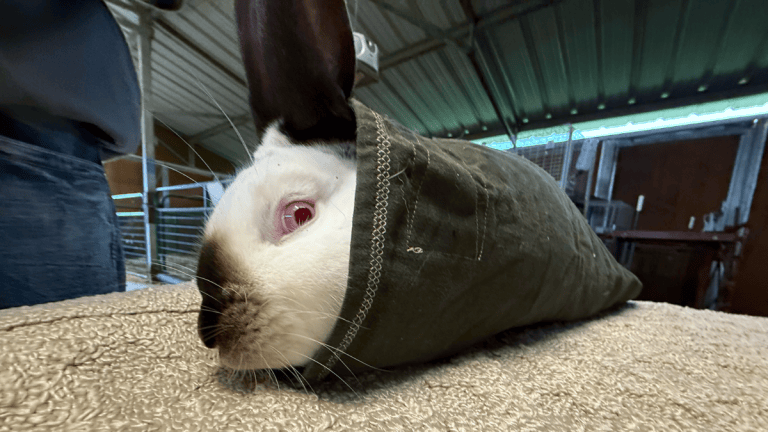
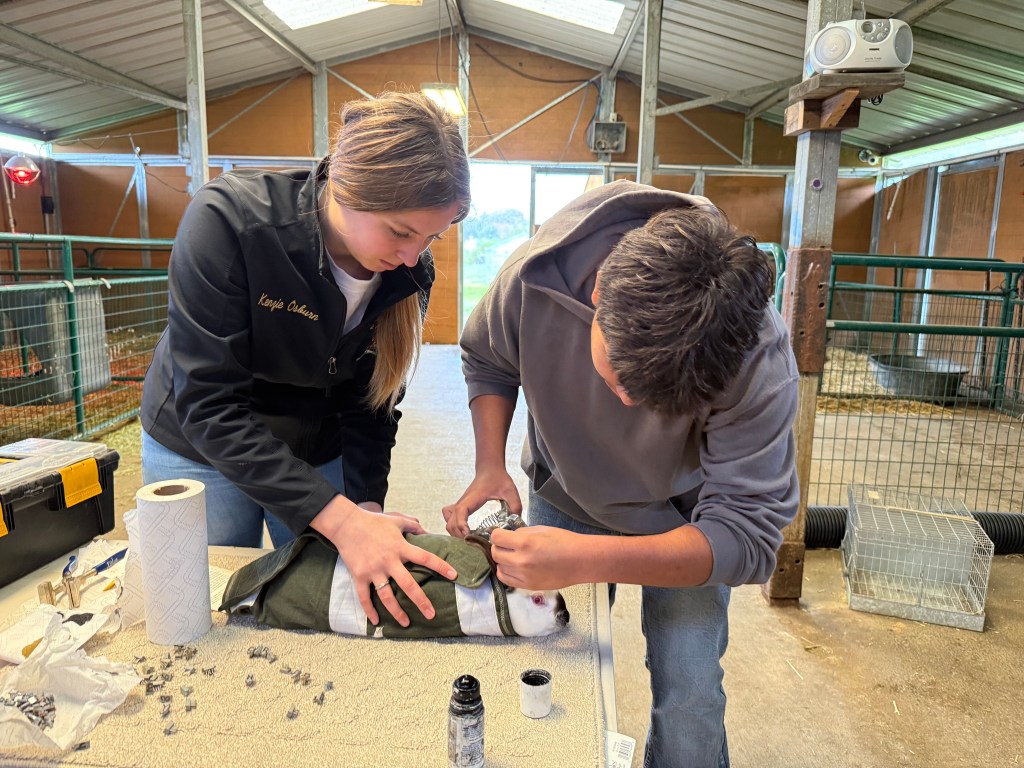
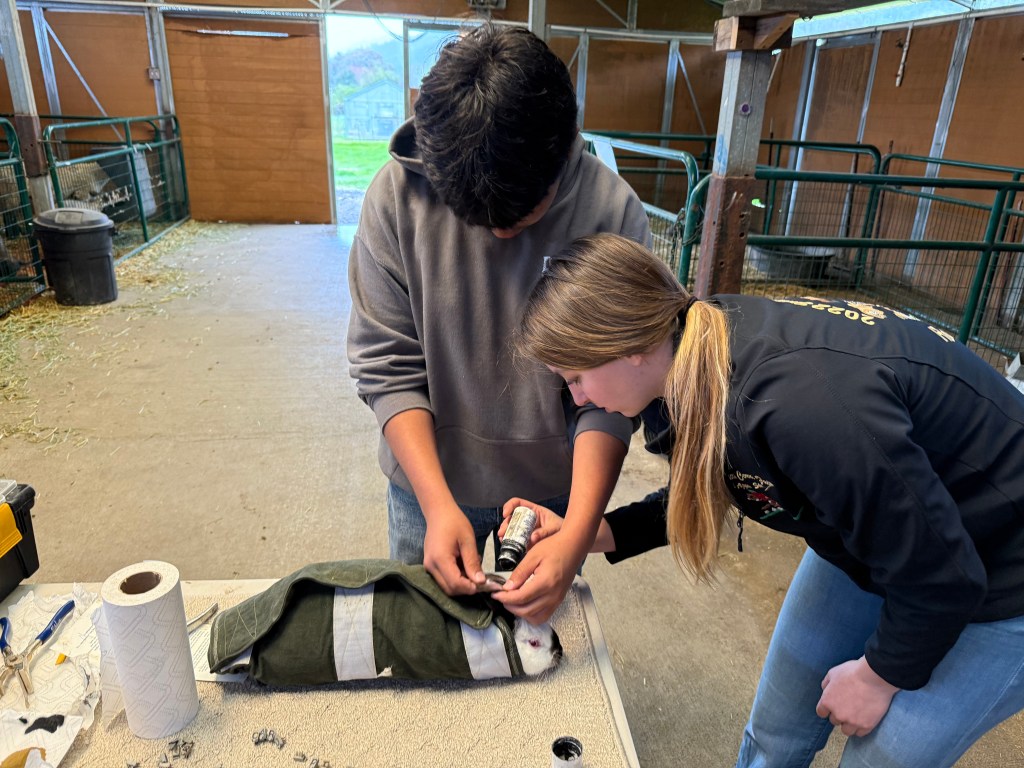
Ivan Alvarez and Kenzie Osborn are preparing for the process of tattooing Mr. Carrott [Photo by Catalina Cowen]
At a glance, rabbits of the same breed look nearly identical, and that’s where tattooing comes in. “Ukiah High School tattoos their rabbits because it’s a form of identification so in a case we mix them up we can identify which rabbit is which,” Ivan explained.
According to Instructions for Tattooing Rabbits by Travis West and Lucinda B. Miller of Ohio State University Extension, tattooing is “the only accepted and appropriate method to identify rabbits used for breeding and showing in the United States.”
So how do rabbits actually react? Ivan described tattooing a Californian buck named Mr. Pickles: “The rabbit reacted how any animal would, he jerked and was skittish as any animal would because it’s a needle piercing their skin.”
The tattoo goes inside the rabbit’s left ear—the standard for identification. “The right ear is reserved for when a rabbit gets registered,” Ivan added.
Ink must be applied to the tattoo gun before the process begins [Photo by Catalina Cowen]
The tool used is a clamp-style tattoo gun. “Setting up the tattoo clamp was a difficult process at first, but then after I read the instructions more I better understood how to do it.” The clamp has sharp digits that pierce the skin and leave a mark in the shape of numbers or letters. Ink is then rubbed into the punctures, which heals into a permanent ID.
Ivan summed up the experience this way: “My thoughts on tattooing rabbits for the purpose of identification is that even though it hurts, it is better for them and for us so we know who is who and so that we don’t get them mixed up with other peoples rabbits.”
And how did Mr. Pickles do after all that? Pretty great. “Mr. Pickles did really well at the show. He got Best of Breed. This means he was the best Californian rabbit at the show,” Ivan said. “He was basically an all-around perfect rabbit which is also good for breeding.”
From blue ribbons to real-world animal science, rabbit tattooing is just one more way Ukiah High gives students a hands-on education they’ll never forget.
With opioid overdoses rising nationwide, Ukiah High is staying prepared. Thanks to a safety grant, the school has stocked Narcan, a life-saving drug that can reverse overdoses. While it’s never been used on campus, staff training and access to Narcan highlight growing concerns over fentanyl. UHS News sat down with staff and officials to learn more.
A report to the California State Assembly shows a steep rise in teen opioid overdoses. In 2019, fentanyl killed 81 teens ages 15 to 19. By 2021, that number nearly tripled to 230.
In late February, two teens in Santa Rosa tragically died from a fentanyl-laced overdose. A 16-year-old girl and an 18-year-old guy thought they were using cocaine, but it was likely mixed with fentanyl, a deadly opioid. Later that same day, two other teens ended up in the hospital from another fentanyl overdose. These incidents show just how dangerous fentanyl is, and why it’s so important for schools like Ukiah High to be ready and protect students from these life-threatening drugs.
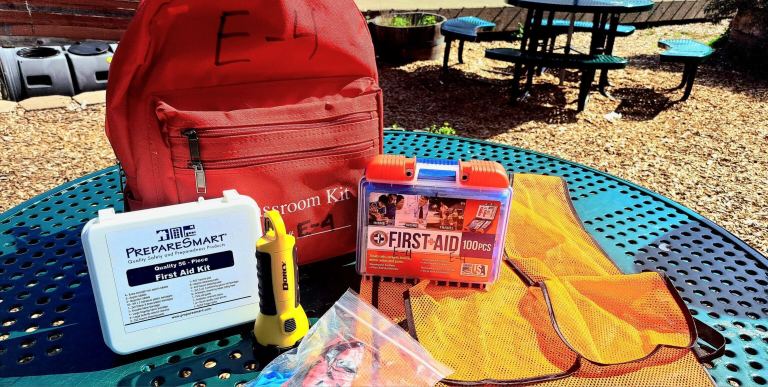
According to Ukiah High Assistant Principal Jonica Vice, the school obtained Narcan through a safety grant to ensure staff are prepared in case of an emergency. The type of Narcan available on campus is the nasal spray version, which is easy to administer and widely used in overdose situations.
Vice explained that staff members have the option to complete Narcan training either online or in person, depending on their role. While training is not required, it is strongly encouraged, especially for coaches and teachers who interact with students daily. Fortunately, Ukiah High has never had to use Narcan on campus.
Despite this, Vice emphasized the importance of schools carrying Narcan, given the rise in fentanyl-laced substances. “Unfortunately, we’re in a situation where kids don’t always know what they’re consuming or smoking,” she said. Having Narcan readily available could mean the difference between life and death in a crisis.
Brendan Turner, Ukiah High’s SCRUBS teacher and a former medic and firefighter, explained that Narcan works by blocking opioids from attaching to receptors in the brain. This process reverses the effects of an overdose, restoring normal breathing and potentially saving a person’s life.
Turner emphasized the importance of high schools carrying Narcan due to the growing risk of fentanyl exposure. While Ukiah High has never had to use it, he believes having Narcan on hand is a necessary precaution to keep students safe.
Ukiah High Principal Dr. Analese Alvarez sees Narcan as a crucial safety measure on campus. “The fact that we have Narcan on campus is huge,” she said, emphasizing how easily accidental exposure can happen. “Sometimes you might ask a friend for some Tylenol, and they accidentally hand you something else. Never, ever in the history of ever should you hesitate to help someone—you will never get in trouble for saving a life.”
She also stressed how the risks of drug use have changed. “Thirty years ago, when I was in high school, my friends that experimented didn’t have to worry about fentanyl-laced things,” she said. “That’s just the reality of the world we live in now—no matter how trustworthy the person who’s providing something to you, they may not know where it came from or whether it’s laced with fentanyl.”
Education can mean the difference between life and death. “We actually had a student last year who carried over-the-counter Narcan in her bag,” Alvarez said. “Because of the drug and alcohol presentations in freshman advisory, she knew what an overdose looked like and saved someone’s life outside Safeway last year.”
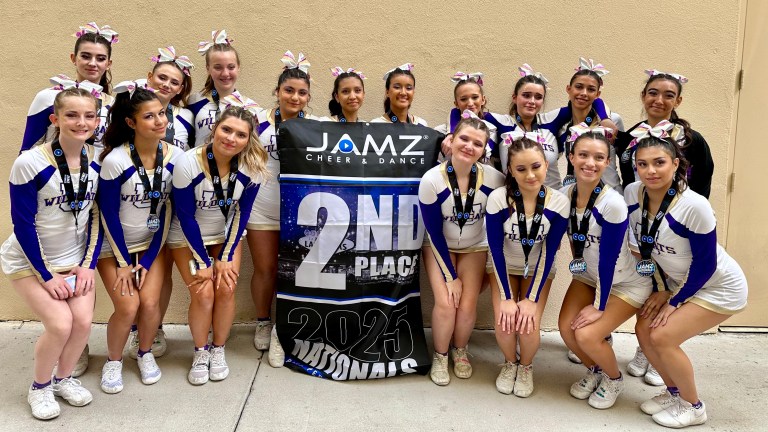
In their first year as a competitive team, Ukiah High School’s cheer squad made history, placing second at the JAMZ School Cheer Nationals in Las Vegas. The competition is one of the biggest in the country, bringing together top middle and high school teams to battle for national titles with high-energy routines and intense performances.
Ukiah’s team is proving that cheerleading is more than just school spirit—it’s a demanding sport combining gymnastics, dance, and acrobatics. Coach Jamie Planka believes the sport deserves more recognition. “We do a lot more than people realize,” she said. “We stunt, which is halfway to acrobatics.” With just one shot at a two-and-a-half-minute routine, the pressure is intense.
Some stunts seemed impossible at first, but through hard work, the team made them happen. “There were a lot of things we weren’t sure we could do, like the inversions in our routine,” Planka said. “But this group of girls really showed up, especially in hard times.”
For sophomore Joanney Arellano, cheerleading is an adrenaline rush like no other. “The feeling of being on a mat is something unexplainable,” she said. “Your hard work pays off.” Despite challenges throughout the season, stepping onto the national stage was unforgettable. “It was so cool to see different teams, their bonds, and their skills,” she said. She also thinks cheer’s difficulty is underestimated. “Not everyone has the flexibility, stamina, and strength. Like, let me see you lift up a girl.”
The Cheer team enjoying the bright lights of Las Vegas
Senior Cici Slotte cherished the time spent with her teammates. “Obviously, performing was amazing, but probably my favorite part was just hanging out and getting that quality time,” she said. The season had its struggles. “Sometimes our team doesn’t work in practice, and some people don’t want to put in the work,” she admitted. But once they got to Nationals, everything clicked. “We worked together and did a good job.”
Slotte also believes cheerleading is overlooked. “People think it’s just for girls and not that hard, but they don’t see how much work we put in,” she said. Competing is an emotional rollercoaster. “Waiting in the back, it’s nerve-wracking. I just pray everything hits.” But once on the mat, instinct takes over. “I black out. I don’t know what my body’s doing. I just go with it and hope for the best.”
Ukiah High’s cheer team made a statement at Nationals, proving their dedication and talent. They’re not just cheering for others—they’re earning recognition for themselves.
Walking through Ukiah High after lunch or break, it’s not uncommon to see crows or ravens swooping down to savage through piles of hot Cheeto bags, chocolate milk cartons, and other general trash. What might seem like a harmless quirk of nature is actually a symptom of a much larger problem: the cleanliness of our school and its effects on local wildlife.
Despite trash cans being placed strategically throughout the campus, litter is left strewn across common areas after every break. This attracts birds like ravens and other wildlife that feast on our leftovers. While the presence of these birds might add to the lively atmosphere of campus, their increased dependency on human food (trash) poses significant risks, both to them and to our environment.
Scott Porzio, a custodian at Ukiah High School, told UHS News that crows and ravens are a year-round presence on campus but become most active in warmer months. These birds often snatch up leftover student trash, scattering debris and creating extra cleanup work. It’s not unusual to find litter on the school’s rooftops — dropped there by the birds themselves.
Ravens are opportunistic feeders, which means they’ll eat almost anything, but their reliance on our trash disrupts natural feeding patterns. Instead of foraging for food like insects, seeds, and small animals, these birds are consuming processed and unhealthy food. Over time, this can lead to health issues for the birds and a growing dependence on human waste as a food source.
Moreover, other wildlife may be drawn to campus in search of an easy meal. In the past the school has struggled with rodents, so this trash problem isn’t new. Animals ingesting plastics or other non-biodegradable materials also risk internal injuries or even death.
Principal Analese Alvarez is frustrated by the ongoing trash problem at Ukiah High. “I will say I am baffled at how some students treat this campus,” she admitted. Having worked at other schools, she noted that she has “never seen the trash issue this big” and believes the problem stems from habit. “It’s just become habit to leave stuff behind and let someone else deal with it,” she said.
While staff and custodians work to keep the campus clean, Alvarez believes real change must come from students. “We’re trying to break that habit, but the most powerful way to break it is if students insist that their peers clean up after themselves,” she said. No matter how many times an authority figure says it, she emphasized, true motivation to keep the school clean has to come from within.
To Alvarez, the state of the campus reflects on the entire student body. “It doesn’t matter how many times your parents tell you to clean your room, right?” she said. “The motivation to do it is internal.” She hopes students take pride in their school and hold each other accountable.
Alvarez is open to ideas on how to improve the culture around campus cleanliness. “I would love any ideas on how we message all of our students to take care of our campus because it reflects on all of us—on who we are and what we believe in,” she said.
A group of Wildcats is trying to tackle this problem. The Environmental Club has been working hard to keep the campus clean, dedicating time to picking up trash and advocating for better waste disposal. Aliyah Rosario, co-president of the Environmental Club, told UHS News that “Cleaning up the campus is important because it creates a safer and healthier environment for everyone.”
Rosario said the “Environmental Club spends so much time on cleaning and investing in recycling bins because making our world a better place starts with local actions, and I hope to inspire others to make a difference too.”
With nearly 1,800 students, Ukiah High’s campus supervisors play a key role in keeping the school safe and running smoothly. While teachers and coaches support students in the classroom and on the field, supervisors are the first line of defense when it comes to security and student well-being.
Eight supervisors patrol campus daily, covering miles on foot and responding to everything from minor disruptions to serious incidents. To get a better understanding of what they do, the Ukiah News Team spent a day shadowing one of them.
A Job That Keeps You Moving
Tiffany Montessonti has been a Ukiah High campus supervisor since 2022. Before this, she worked at a juvenile hall, where she gained experience working with a wide range of students. She enjoys her job, telling UHS News, “I have had a lot of jobs, and this one is really cool.”
Supervisors follow assigned routes throughout the day, covering 7-10 miles on foot. They use radios and earpieces to stay connected, ensuring they can respond quickly when needed. But the job isn’t just about security—it’s also about building relationships with students.
“We give kids advice, not just about school stuff,” Montessonti explained. Throughout the day, she greeted students, reminded them to get to class, and even stopped to chat. When she saw a student lingering outside, she didn’t hesitate to call them out: “I want you to get inside and learn something!”
More Than Just Rule Enforcers
Our day with Montessonti started at the small tri-gym, where she checked doors, helped late students inside, and secured the building. From there, we walked the perimeter, a task that becomes especially important during rainy months when supervisors check for leaks and safety hazards.
Of course, not every student is happy to see a campus supervisor. Some push back against authority, and dealing with disrespect comes with the job. “Kids try to be disrespectful when they are mad, and they try to make us feel mad,” Montessonti said. But she doesn’t let it get to her, even joking, “I get paid to be a snitch.”
Handling Tough Situations
Along with monitoring campus, supervisors handle disciplinary issues. We followed Montessonti as she delivered detention slips and escorted students to the Restorative Justice Center.
When asked about her most intense moment on the job, she recalled her first time breaking up a fight. Being new, she struggled to get the students to listen. “I felt vulnerable,” she admitted, explaining that while supervisors work to de-escalate situations, it’s not always easy.
Rain or Shine, They’re on Duty
At the end of our shift, we joined Montessonti at the front gate, where she ensured students coming from the park didn’t sneak onto buses. No matter the weather, supervisors are out there making sure things run smoothly. “We’re out here in the most drastic weather—from freezing cold to 115-degree blazing sun,” she said.
After spending the day shadowing a campus supervisor, one thing was clear: they do much more than enforce rules. They support, protect, and connect with students every day.
After Winter Break, Ukiah High students returned to campus to find a more restrictive bathroom policy in place. These changes have been met with skepticism from students, while staff members wait to see if they lead to improved behavior.
Bathrooms play a crucial role in students’ comfort and hygiene at school. Recognizing their importance, the California Education Code includes detailed guidelines for restrooms in K-12 schools.
The new policies Ukiah High instituted in January include:
Limiting the number of students in a restroom based on posted maximum occupancy.
Using the restroom only for its intended purpose before exiting.
Locking restrooms at the warning bell during break and lunch.
Restricting bathroom passes during the first five minutes of each class period.
To understand the reasoning behind these changes, UHS News spoke with Vice Principal Jonica Vice, who explained that the administration introduced the policies in response to issues with tardiness and attendance. “We were seeing issues with tardies and low attendance rates with students, so we decided to take an initiative on this issue,” Vice said.
Vice noted that many students were avoiding the restroom during lunch and break, instead waiting until class started. “We see large crowds rush into the bathrooms instead of attending class,” she explained.
The administration hopes these policies will help students manage their time better and reduce tardiness. Vice believes the changes will encourage better habits among students.
However, some students are unhappy with the new restrictions.
11th grader Abi Rodriguez voiced her frustration, telling UHS News, “I dislike this policy. There is no point in the policy; students will still miss class either way.”
10th grader Ariana Moreno shared a different concern, explaining, “Students may have reasons for not using the bathroom during breaks, including how crowded the bathrooms are.” She also observed, “Many students use the bathroom for inappropriate reasons.”
Senior Titus Psara described his own experience with the new policy: “It was a struggle since I needed to use the restroom but couldn’t due to the new guidelines.”
Some staff members, however, believe the policy is already having a positive effect. UHS Supervisor Tiffany Montesonti said she has seen fewer tardies. “A lot of students create a Minga pass and return when the bathrooms reopen,” she noted.
Montesonti supports the administration’s decision, adding, “You have quite a long time during lunch to use the bathroom, so waiting until the very last minute is not a way to be, because you won’t be able to use it a lot of the times.”
Ukiah High history teacher Michael Dursteler has not yet noticed significant changes in his classes. “I think that it hasn’t been in place long enough to see,” he said. “But we’ll see by the end of the semester.”
While staff members monitor the long-term impact, Abi Rodriguez has already made up her mind. “There will not be changes with this policy, with more students skipping or cutting class and wasting their time in the bathroom,” she said.